Why soft skills are gaining importance in the age of AI

Why soft skills are gaining importance in the age of AI

Why soft skills are gaining importance in the age of AI

Why soft skills are gaining importance in the age of AI

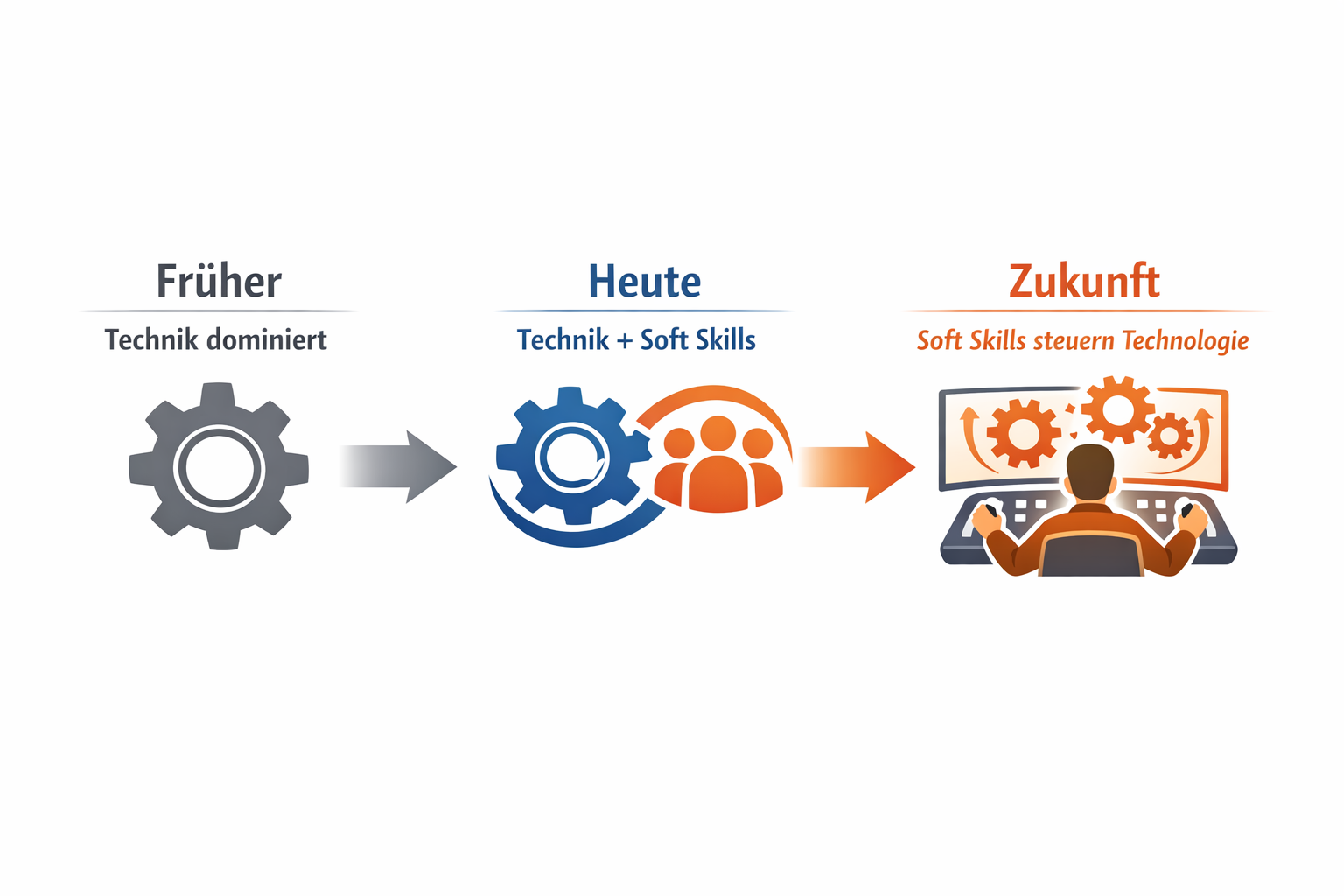
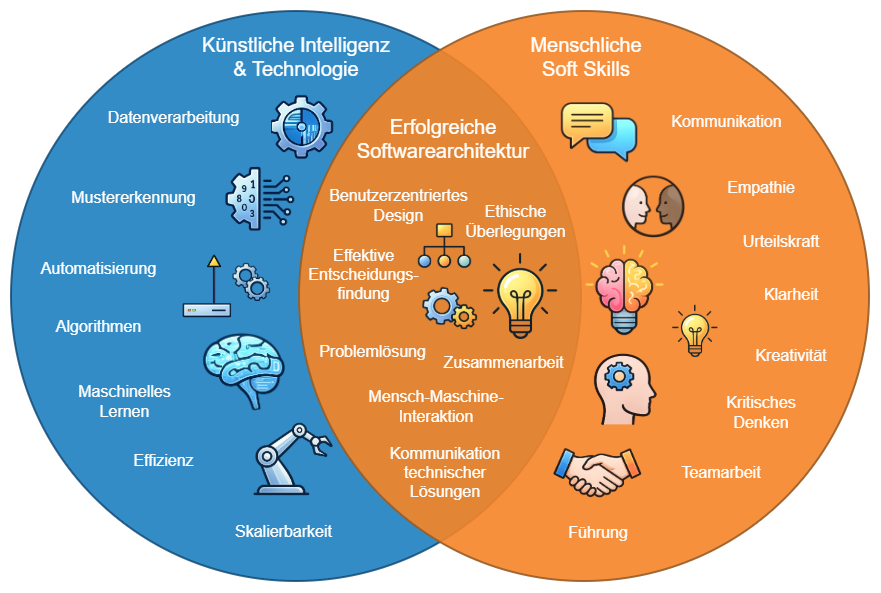
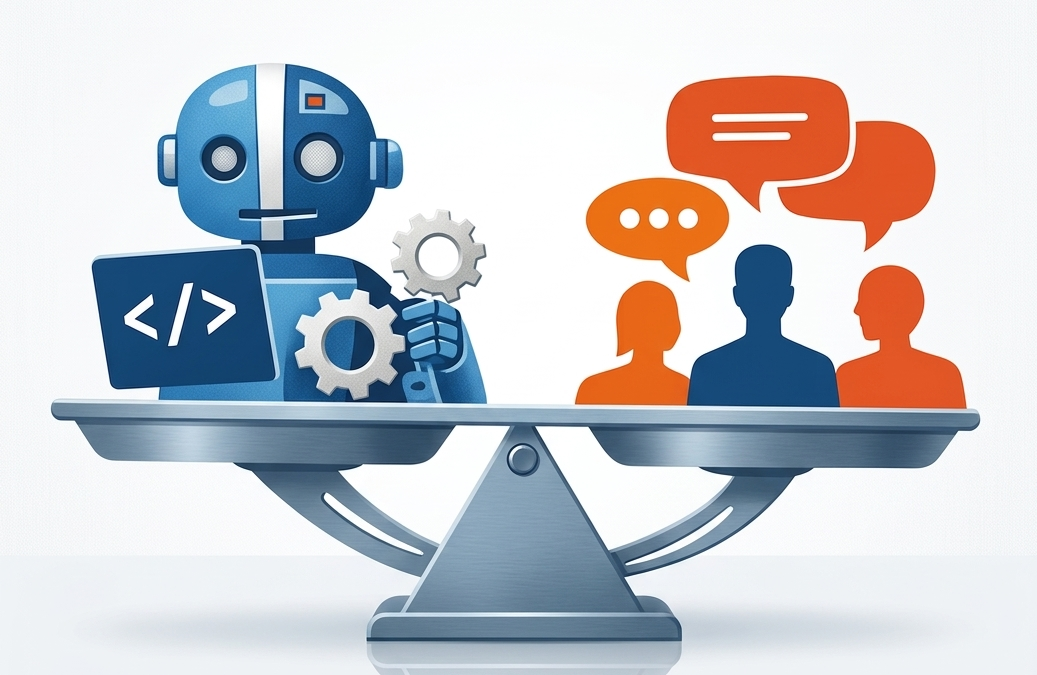
In the age of artificial intelligence, soft skills are becoming increasingly important and are evolving into indispensable future skills. Especially in the fields of AI leadership and the soft skills of software architects, it is crucial to strengthen communicative and social competencies in addition to technical know-how. These abilities enable professionals to successfully lead innovative projects and foster effective collaboration within interdisciplinary teams. In this article, we highlight which future‑oriented soft skills are particularly in demand and how they can sustainably advance your career in the AI landscape.

Sources:

Software architecture in the age of AI: technology meets soft skills

Software architecture in the age of AI: technology meets soft skills

Software architecture in the age of AI: technology meets soft skills

This blog series belongs on your reading list!

Is the human role as a decision-maker disappearing in the age of artificial intelligence? No — quite the opposite. Soft skills such as clarity, communication, and sound judgment are becoming even more important today. While AI can process data, true judgment remains uniquely human. In this blog series, you will learn why these abilities are indispensable for architects and how you can strengthen them in a targeted way to remain successful in the future. After reading, you will know exactly which soft skills to develop in order to excel when working with AI systems. No algorithm can replace small talk in a team meeting — because that is where humanity, intuition, and genuine connection show themselves, and those remain our strongest recipe for success.

These articles await you:

WHY SOFT SKILLS ARE GAINING IMPORTANCE IN THE AGE OF AI

In the age of AI, project success is determined by more than algorithms alone. Discover which soft skills are becoming true future skills for AI leadership and software architects today.

CLARITY IN THE AGE OF AI: WHY PRECISE COMMUNICATION IS BECOMING ESSENTIAL

As AI takes over more tasks, one thing becomes even more important: clear communication. Why precise messaging is becoming a key competence in the age of AI.

AI MEETS COMMUNICATION: WHY HUMAN JUDGMENT REMAINS INDISPENSABLE

AI can do a lot — but good architecture is created through dialogue. Why communication, empathy, and human judgment are more important than ever for software architects.

AI as a Driving Force

AI as a Driving Force

AI as a Driving Force

Why You Shouldn’t Miss This Article!

“AI as a Catalyst for Software Architecture” – published on heise online – impressively demonstrates how the role of software architects is fundamentally changing in the age of data-driven systems.

Key Points at a Glance:

  • Two Roles of AI: It can act either as a supporting tool or as an integral part of systems – with significant implications for methods and mindsets in architecture.
  • Data- and Model-Centric Architecture: The focus is increasingly shifting toward data flows, ML models, and training processes – requiring a new, iterative architectural approach.
  • New Quality Definitions and Areas of Responsibility: Architecture must ensure quality on multiple levels, while new roles and interfaces are emerging at the same time.

Why This Article Is Worth Reading:

  • Thought Leadership Perspective: It highlights how the role of software architects is evolving – from the classic planner to a data- and model-driven designer.
  • Future Relevance: Anyone responsible for software architecture and technology design today cannot afford to ignore this transformation.

Read the Full Article Here:

AI as a Catalyst for Software Architecture: A Practical Example from Public Transport

Conclusion:

A must-read for software architects, technology leaders, and decision-makers who want to understand how AI is transforming systemic thinking and opening up new perspectives for action.

Sources

  1. Heise Online (accessed on August 23, 2025)

DDoS: Permanent Data Flood Without a Protection Strategy – And How to Protect Against It

DDoS: Permanent Data Flood Without a Protection Strategy – And How to Protect Against It

DDoS: Permanent Data Flood Without a Protection Strategy – And How to Protect Against It

The Evolving Threat Landscape of Web Applications and IT Systems

The threat landscape surrounding web applications and IT systems is becoming increasingly sophisticated. While traditional attacks such as SQL injections, cross-site scripting, and session hijacking remain active in 2025, they have been significantly mitigated through modern web frameworks, web application firewalls (WAF), and adherence to best practices.

However, have you ever heard of attacks that don’t aim to steal or manipulate confidential data? There are also attacks that solely focus on taking IT systems offline for as long as possible and maximizing the damage to those affected.

In this article, we will examine one such malicious attack method, which reached a new dimension in 2013 with the traffic spikes on spamhaus.org. Five years later, GitHub experienced a DDoS attack with an astonishing data rate of 1.35 Tbps. These kinds of attacks are not isolated incidents – any company or organization could be affected tomorrow.

Sources

  1. Spamhaus History (accessed on 14.09.2024)
  2. GitHub DDoS Incident Report (accessed on 03.09.2024)

AI and Ethics: What Are Our Guidelines for the Use of AI? Part (3/3)

AI and Ethics: What Are Our Guidelines for the Use of AI? Part (3/3)

AI and Ethics

What Are Our Guidelines for the Use of AI?

„Artificial intelligence is probably the best or the worst thing that can happen to mankind.“

(Stephen Hawking, physicist)

„The power of artificial intelligence is so incredible that it will change society in profound ways.“

(Bill Gates, founder of Microsoft)

What Are Our Guidelines for the Use of AI?

It’s the year 2024. The hype surrounding LLMs and ChatGPT started a year ago and is now having an initial impact on software development. AI chatbots can not only generate texts, draw photorealistic images, create music or answer questions — they can now also generate functioning programs in a programming language that even work. And through continuous learning, they are getting better and better at what they do. This is a powerful technology and so far there are hardly any regulations or legal guidelines for the use of these tools. So it’s time to start thinking about guard rails for the creation and use of this extremely powerful technology. Because one thing is clear: AI will be integrated into all kinds of products in the future and will therefore have a major impact on all our lives.

To really show the scale that will be upon us with the dawn of the AI age, I would like to quote here from a TED talk by Mustafa Suleyman:

“With that in mind, I offer the following metaphor today to help us grapple with what this moment [the widespread adoption of AI] really is. I think AI is best understood as something like a new digital species. Please don’t take this too literally, but I predict that we will see them as digital companions, new partners in our life journeys. Whether you believe we are on a 10‑, 20- or 30-year journey, I think this is the most accurate and fundamentally honest way to describe what is actually coming.”

And an important insight from him is: “We can only control what we can understand”. So what do we need to do to understand this?